
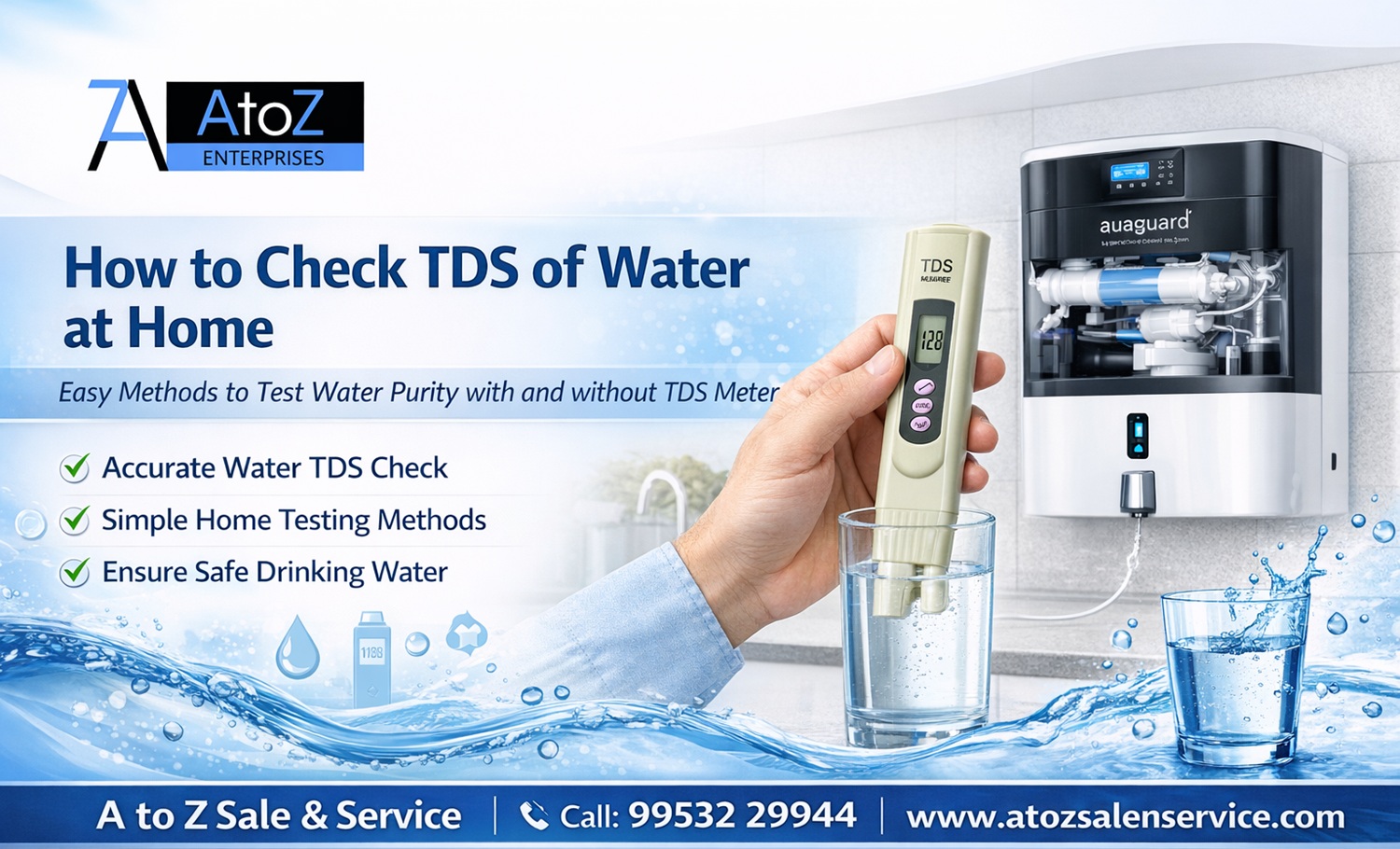
Drinking water is one of the basic needs. It is important to know how to check water TDS, as it helps find the water purity level. If you know how to measure the TDS, it can help you ensure safe and pure drinking water for your family. It further helps understand the need to have pure drinking water by having modern water purifiers.
So, TDS level of water to determine how pure it is water and whether it can be used for household chores. It can help you understand the need for a water purifier to have a germ-free water supply for daily use.
TDS stands for Total Dissolved Solids, which includes minerals, salts, and organic matter present in water. It plays an important role in determining water quality.
TDS includes:
Understanding TDS helps you decide whether your water is safe for drinking or needs purification.
Yes, by measuring the water purity level, it is easy to understand the TDS level in water. The TDS concentration should be 300mg per litre. If the TDS concentration is higher, it indicates that drinking water may cause waterborne diseases. Contaminated water is a major cause of health issues globally and needs to be addressed soon. This is what raises the need to check the water TDS.
Poor water quality remains a significant concern in India. To measure TDS in water, one has to check the presence of total dissolved solids.
Water having high TDS may result in the following:
So, effective TD measuring can prevent the alarming effects of high TDS in water. It can happen irrespective of which part of India you live in.
Let us take a look at the ways to measure TDS in water and focus on three primary methods.
Knowing the correct TDS range is important to understand water safety.
TDS Level Chart
| TDS Level (mg/L) | Water Quality |
|---|---|
| 0 – 50 | Very low (not ideal) |
| 50 – 150 | Excellent |
| 150 – 300 | Good for drinking |
| 300 – 500 | Acceptable |
| Above 500 | Not safe for drinking |
Maintaining the right TDS level ensures safe drinking water and better health.
There are multiple ways to check TDS, both with and without a meter.
This is the most accurate method to check TDS levels.
This method is commonly used when people search for how to check water TDS at home.
If you don’t have a meter, you can still estimate water quality.
Many users search for how to check TDS of water without TDS meter, and these methods can help give a basic idea.
It is important to identify signs that indicate poor water quality.
If you notice these signs, it may be time to test your water and take action.
Regular TDS monitoring helps maintain water quality and health safety.
Many people search for check water TDS at home to ensure their water is safe for daily consumption.
Different tools are available to measure TDS effectively.
Common TDS Measuring Tools
| Tool | Usage |
|---|---|
| TDS Meter | Instant reading at home |
| Digital Water Tester | Accurate and portable |
| Laboratory Testing | Detailed analysis |
| RO Water Purifier Display | Built-in TDS reading |
Using the right tool ensures accurate water quality measurement.
If your water has high TDS levels, using a water purifier becomes essential. Modern RO systems help reduce TDS and remove harmful impurities.
A properly installed purifier ensures:
You can also consider professional services like water purifier installation for proper setup and performance.
Understanding how to check TDS of water is essential for maintaining safe drinking water at home. Whether you use a TDS meter or simple observation methods, regular monitoring helps ensure water quality.
By maintaining the right TDS level, you can protect your health, improve water taste, and extend the life of your appliances. If your water quality is poor, investing in a reliable water purifier is always a good decision.
You can use a TDS meter for accurate results or observe taste, odor, and scaling for a basic idea of water quality.
The ideal TDS level for drinking water is between 150 to 300 mg/L for safe consumption.
Yes, you can check taste, scaling, and soap reaction, but these methods are not fully accurate.
High TDS may contain harmful impurities and can affect taste, health, and appliances.
It is recommended to check water TDS every 1–2 months to ensure safe drinking water.
Very low TDS water may lack essential minerals and may not be ideal for long-term consumption.
A digital TDS meter is the best and most convenient device for measuring water TDS at home.
No, boiling water does not reduce TDS; it may actually increase concentration due to evaporation.
Yes, RO purifiers are designed to reduce TDS and maintain safe drinking water levels.
You can improve water quality by using a good RO purifier and scheduling regular maintenance.