
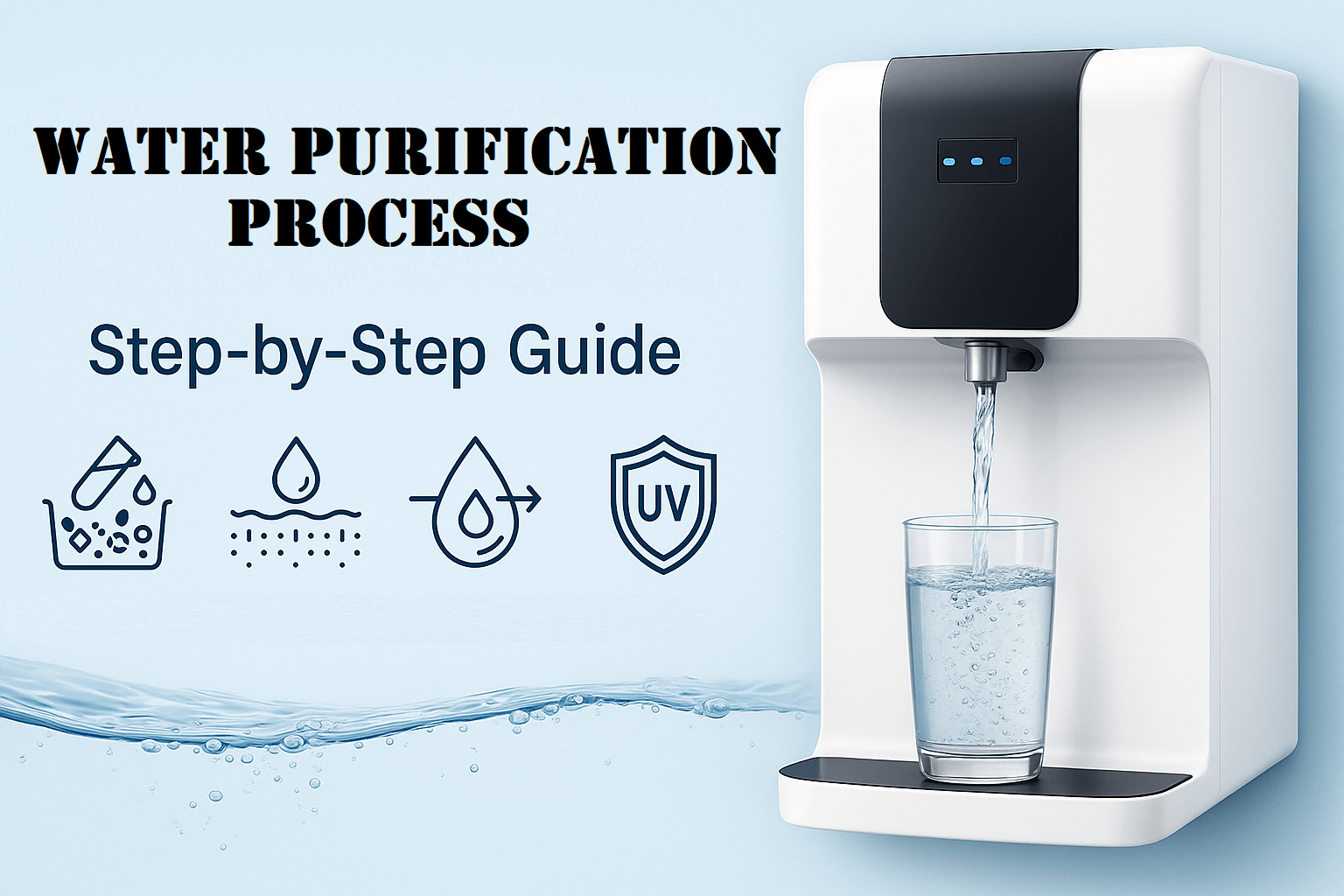
Safe drinking water is a basic need, and poor water quality affects health. That’s where there is a need for an efficient water purification process that can assure a safe drinking water source.
As there is more pollution and contaminants in the water source, having an advanced water purifier has become a necessity. One should not confuse with modern purifiers and filters, as the modern options allow the water to go through effective water purification.
Once you learn about the breakdown of the advanced purification and how one step is essential for the next, you will value the need to invest in a quality purifier.
To understand the purification of water process, one has to know how water purifiers are essential. The purification can help get rid of harmful contaminants, making water chemical-free and suitable for consumption. There are several purification techniques, such as Ultrafiltration, Reverse Osmosis, Ultraviolet, and activated carbon filters. Each helps ensure safe and healthy drinking water at home or the office.
The purification is crucial for the following reasons:
Even though raw water looks clean, it carries dangerous microorganism and chemicals that needs elimination through an effective process. The contaminants are not visible to the normal eye. Failing to adopt the latest purification process can lead to development issues in children and other life-threatening diseases.
Let us take you through the detailed steps of water purification that make water suitable for drinking and household chores. There is a mixture of chemical treatment and mechanical filtration, along with UV and RO steps for effective results. The purification methods are described below:
The beginning of the filtration includes these two steps that help remove suspended water particles and provide clean water. Here, water is treated with chemicals like ferric chloride and the like. The chemicals cause the small particles to cluster together, forming large ones, and are termed as flocs.
Following this, flocculation comes in, which involves gentle stirring to allow the big flocs to grow and settle down.
The pre-filtration helps remove particles such as dirt, dust, and mud available in a size of 0.5 microns. This stage is crucial to filter out the particles, so that there is no more clogging in the subsequent water purification process steps. It further improves the water clarity, making it smooth and clean for drinking and daily household chores. The step further protects a RO water purifier and other filtration components from damage of the large particles present in water.
This process helps filter out small carbon particles in contaminated water. Some particles remain suspended as they did not settle during the sedimentation process. The water is filtered through this step, if you are using RO later on. The filtration that occurs during this stage helps eliminate herbicides, chlorine, and other pollutants present in water. This is how the water filtration ensures that water is free from contaminants and any other fine particles.
Before purification, water has to be sent through reverse osmosis to treat the contaminants and other particles. The technology helps remove pesticides, microplastics, heavy metals, and industrial waste. The process guarantees healthy and clean drinking water, especially effective in areas where water is highly polluted and contains a high rate of harmful contaminants. The process further helps eliminate any odour in water. In the RO process, water goes through a semi-permeable membrane that helps filter out the impurities in water.
The ultraviolet light can eradicate viruses, bacteria, and other pathogens, making the water as safe as boiling water. This makes the water strong and prevents the spread of waterborne diseases.
The UF membranes give an extra layer of protection as they help filter out the viral and bacterial components. It is a crucial stage, ensuring water is clear and has been through additional purification.
After adequate water filtration, there is a need for TDS level adjustment. This is possible when using the advanced water purifiers, which reintroduce minerals such as magnesium and calcium into the water. It helps balance the TDS level, ensuring it is suitable for drinking. The nutrient-rich water enhances the drinking experience.
Then comes the final stage, which saves water than traditional purifiers. It is possible due to environmentally friendly technology that involves the use of an efficient process of water purification without compromising the performance of a purifier.
After suitable water purification, it is important to store water in hygienic tanks. One has to be careful with the storage and final dispensing of water, ensuring complete cleanliness.
Timely cleaning of the filter and replacing the malfunctioning parts is crucial. The routine cleaning and replacement can help in the following ways:
This is how timely maintenance and regular RO service can ensure that the filter system is in perfect condition and functioning properly.
Raw treatment, process treatment, and post-treatment are equally crucial to ensure safe drinking water is available for drinking and daily chores. The right method can help with the effective removal of contaminants and other particles from water and ensure its safety. The drinking water solution should use cutting-edge technology, backed by proper RO installation and routine RO service, to ensure clean and safe water every day. This is how both ground and surface water can help transform source water into clean and safe drinking water.