Water quality can vary across residential societies, independent homes, and commercial properties in Gurgaon. If your water purifier starts producing less water, develops an unusual taste, or requires frequent maintenance, replacing the entire unit may not always be necessary. The cause could be related to incoming water quality, filter condition, water pressure or the suitability of your existing system.
AToZ Enterprises helps homeowners with water purifier installation, repair, and maintenance requirements in Gurgaon. Before investing in a new unit, it is worth checking whether your existing purifier can still meet your household’s needs.
How Does Gurgaon’s Water Quality Affect Your RO Purifier?
Water quality depends on the source, local supply conditions, storage tanks, and plumbing infrastructure. Some properties receive municipal water, while others rely on groundwater or a combination of sources.
These differences can affect the type of treatment required. Water containing elevated dissolved solids may need a different approach from water with sediment or microbial concerns. Selecting a purifier without understanding the incoming water quality may result in an unsuitable choice.
A water quality assessment can help determine whether your current system is appropriate and whether any changes to the treatment method are necessary.
Five Things to Check Before Replacing Your RO
1. Test Your Incoming Water Quality
Start by identifying your household’s water source. If you have recently moved into a new property or noticed a change in the supply, consider appropriate water testing.
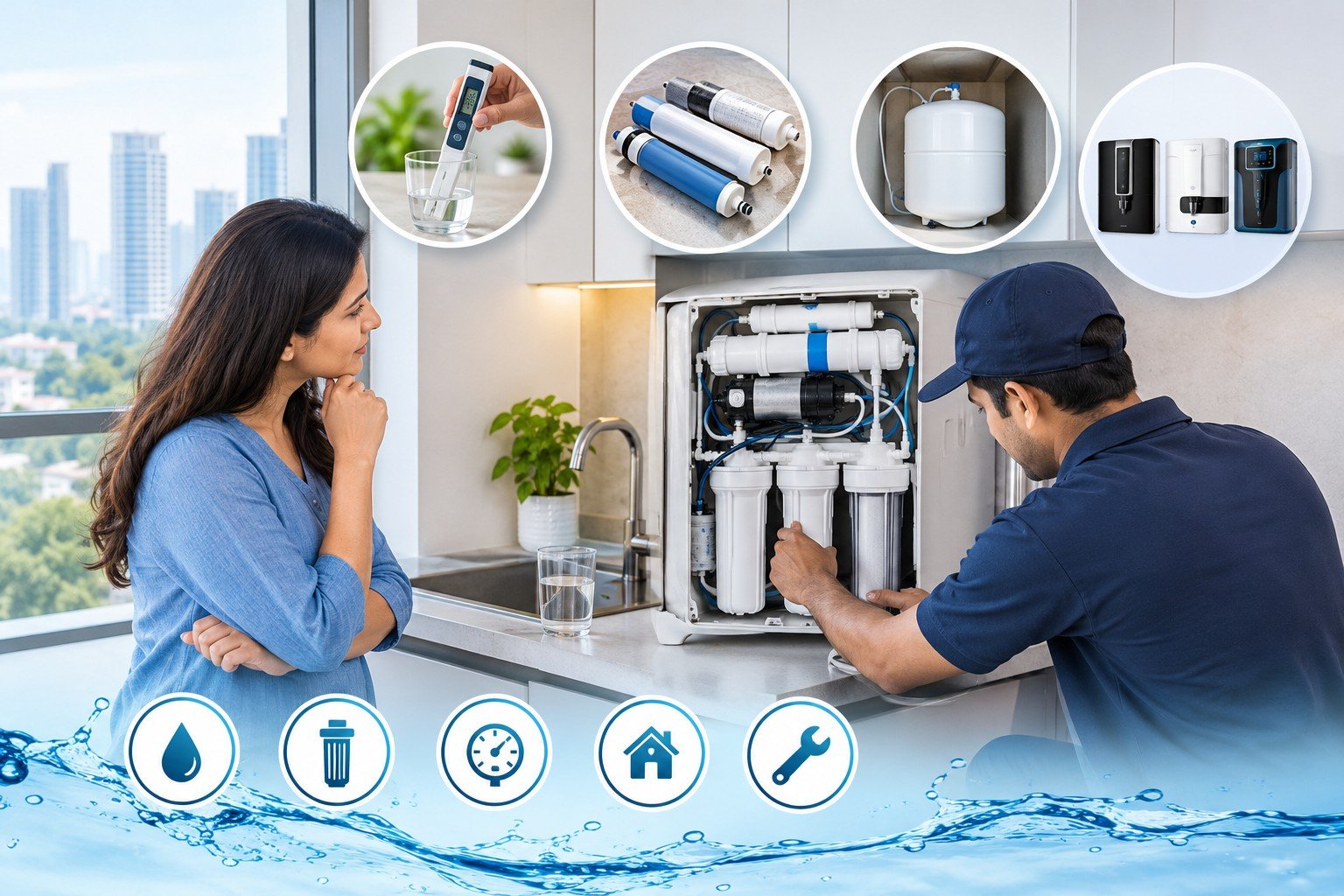
A total dissolved solids (TDS) meter estimates the concentration of dissolved substances, but it cannot identify individual contaminants or confirm that water is safe to drink. Depending on the source, additional testing may be needed for hardness, microbial contamination, nitrate, or other relevant parameters.
These results provide a more reliable starting point for deciding whether your current purification system is suitable.
2. Inspect the Filters and RO Membrane
Reduced water output, unusual taste, or persistent maintenance alerts may indicate that certain components need attention. Sediment filters, carbon filters and RO membranes perform different functions and have different maintenance requirements.
If your purifier has not been checked for some time, arranging an RO service can help identify whether the filters, membrane or other components need inspection. A technician should assess the unit's condition before recommending replacement parts.
Replacing the entire purifier without identifying the underlying issue may lead to unnecessary expenditure.
3. Check Water Pressure and Installation Connections
Low water production does not always mean the membrane has failed. Insufficient inlet pressure, restricted tubing, clogged pre-filters or pump problems can also affect performance.
A professional inspection can help identify whether the issue relates to the supply line, pump operation, storage tank, or installation connections. Correcting a pressure or plumbing issue may restore performance without requiring a new unit.
If the purifier has recently been installed or relocated, checking its connections and operating conditions is particularly important.
4. Consider Your Purifier’s Brand and Current Condition
Your household requirements may have changed since the original installation. A system that previously served a small family may no longer provide enough water for a larger household.
Before choosing a replacement, consider daily consumption, installation space, maintenance costs, spare-part availability and the treatment technology required for your water source.
For example, if your existing unit is an Aquaguard model, Aquaguard service may help identify whether the issue involves its filter assembly, water flow or another component. The correct repair depends on the model and the technician's findings, rather than the brand name alone.
5. Compare Repair Costs With Replacement Costs
For an older purifier, compare the estimated repair cost with the price of a suitable replacement. Consider the condition of the membrane, pump, electrical components and storage tank, as well as the availability of compatible spare parts.
A repair may be practical when the main unit remains in good condition, and only a few components require attention. Replacement may make more sense if several major parts are failing or the existing system is unsuitable for the incoming water.
Ask for a clear explanation of the fault, recommended work, parts required and any applicable warranty before approving the repair.
Do You Need RO, or Is Another Purification Method Suitable?
Reverse osmosis is not automatically necessary for every water source. A high TDS reading indicates elevated dissolved substances but does not reveal their exact composition. Similarly, a low reading does not guarantee that water is free from harmful contaminants.
The appropriate treatment depends on water test results and household requirements. Some situations may call for RO treatment, while others may require suitable filtration, disinfection or a combination of technologies.
If the incoming water quality has changed suddenly, arrange an assessment before assuming that purchasing a new purifier will solve the problem.
When Should You Book Professional Water Purifier Maintenance?
Professional assistance is advisable when your purifier repeatedly stops working, produces significantly less water, develops leaks, makes unusual noises or shows a persistent change in taste.
Owners of Livpure models may need Livpure RO Service when their units require troubleshooting, routine maintenance or component inspection. Before approving work, confirm that the technician understands your specific model and can explain the issue clearly.
Similarly, Kent purifier owners should consider Kent RO service if they notice recurring performance problems or need a professional assessment. A proper diagnosis can help determine whether servicing, component replacement, or a more extensive repair is appropriate.
Choose a service provider who explains the recommended work and uses compatible parts rather than replacing components without a clear reason.
Make an Informed Decision Before Replacing Your RO
A suitable water purifier should match the incoming water quality, household consumption, and required treatment. Checking the filters, pressure, installation connections, and overall system condition can help you make an informed decision and avoid unnecessary expenditure.
For help with purifier installation, repair or maintenance in Gurgaon, visit AToZ Enterprises to explore the available services for your home.
FAQs
How often should RO filters be replaced in Gurgaon?
There is no single replacement interval for every household. Filter life depends on incoming water quality, daily usage, purifier model and manufacturer recommendations. Follow the prescribed maintenance schedule and arrange an inspection when performance changes.
Does a change in TDS mean my RO membrane is damaged?
Not necessarily. Changes in incoming water, system operation or membrane condition can affect readings. Compare appropriate input and output measurements and seek further assessment when needed. TDS alone cannot establish overall water safety.
Should I replace my RO if the water flow becomes slow?
Not immediately. Low output can result from insufficient inlet pressure, clogged filters, membrane deterioration, restricted tubing or pump issues. Identifying the cause first can help avoid unnecessary replacement.
What should I check before installing a new RO in Gurgaon?
Assess the incoming water source, relevant water quality parameters, household demand, inlet pressure, available space and drainage arrangements. These checks help determine which purification system and installation setup are appropriate.