Kent RO Service: Common Problems, Repairs & Maintenance Tips
A Kent water purifier plays an important role in providing treated drinking water for homes, offices, and commercial spaces. However, like any water purification system, it requires timely inspection and maintenance to maintain consistent performance. Issues such as low water flow, unusual taste, water leakage, continuous pump operation, and filter blockage can affect the purifier's functioning if they are not addressed properly.
Choosing professional kent ro service can help identify these problems before they lead to expensive repairs or unnecessary component replacement. AToZ Enterprises provides water purifier maintenance and repair support with an emphasis on proper diagnosis, suitable replacement components, and reliable system operation.
1. Common Problems That Affect Kent RO Performance
A water purifier contains multiple components that work together to deliver purified water. When one component develops a fault, the overall system may not operate as expected.
Some common problems include:
-
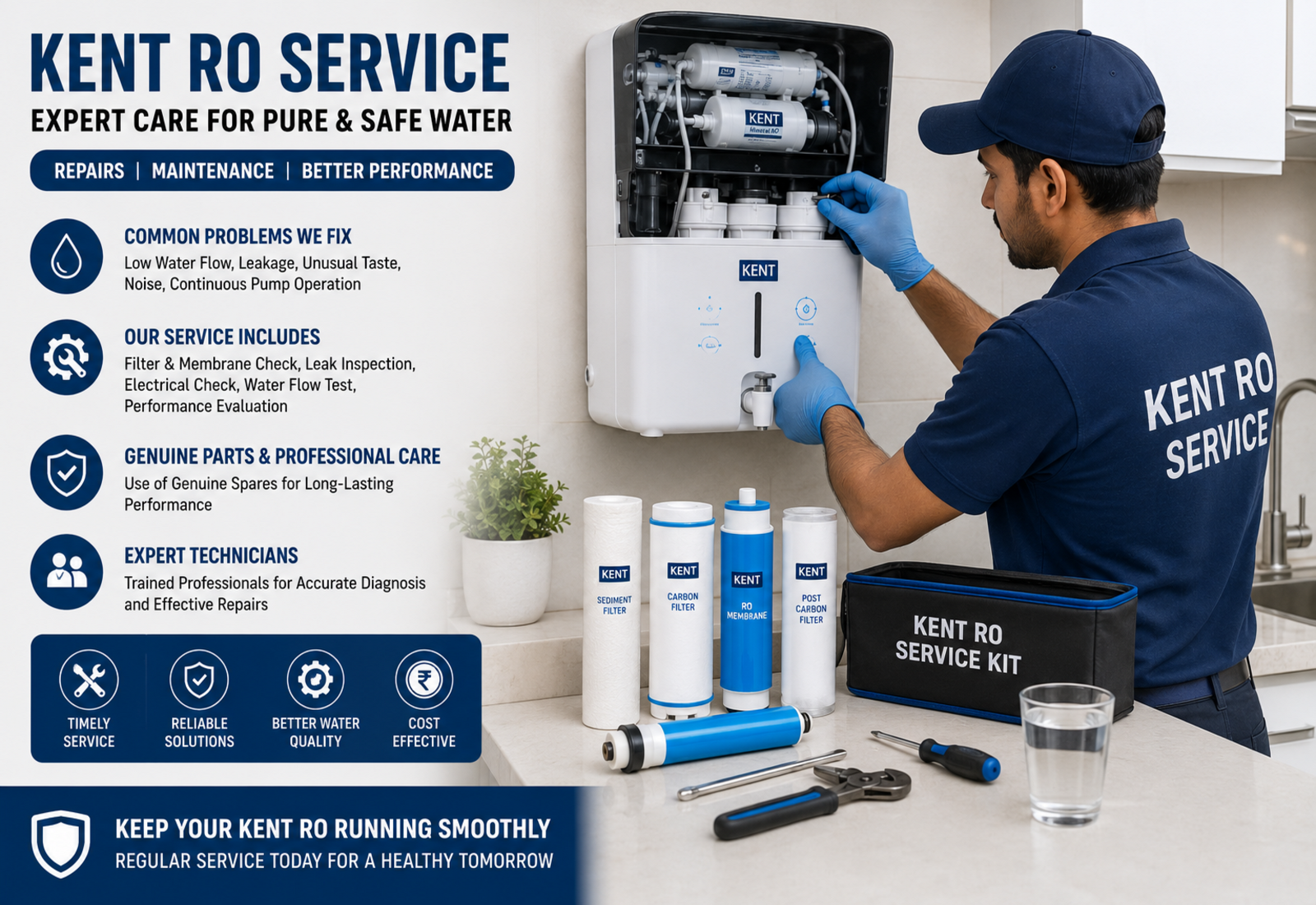
Low water flow: A clogged sediment filter, exhausted membrane, blocked tubing, or insufficient inlet pressure can reduce purified-water production.
-
Water leakage: Loose connectors, damaged pipes, or incorrectly fitted filter housings may cause leakage.
-
Unusual water taste: Changes in taste or odour may indicate exhausted filters, contamination, or a problem with the purification stages.
-
Continuous pump operation: Pressure-related issues, sensor faults, or leakage can prevent the system from completing its normal operating cycle.
-
Excessive wastewater: Incorrect operating pressure, membrane deterioration, or a faulty flow restrictor may affect reject-water discharge.
Identifying the actual cause is important because similar symptoms can result from different technical problems.
2. Why Regular Filter and Membrane Maintenance Matters
Filters and membranes are essential components of an RO purifier. Sediment filters help capture suspended particles, while activated-carbon filters reduce chlorine and certain organic compounds. The RO membrane performs the primary dissolved-solids separation process.
Over time, these components can become clogged, exhausted, or affected by scaling and fouling. Their condition depends on source-water quality, daily consumption, operating pressure, and the manufacturer's recommendations.
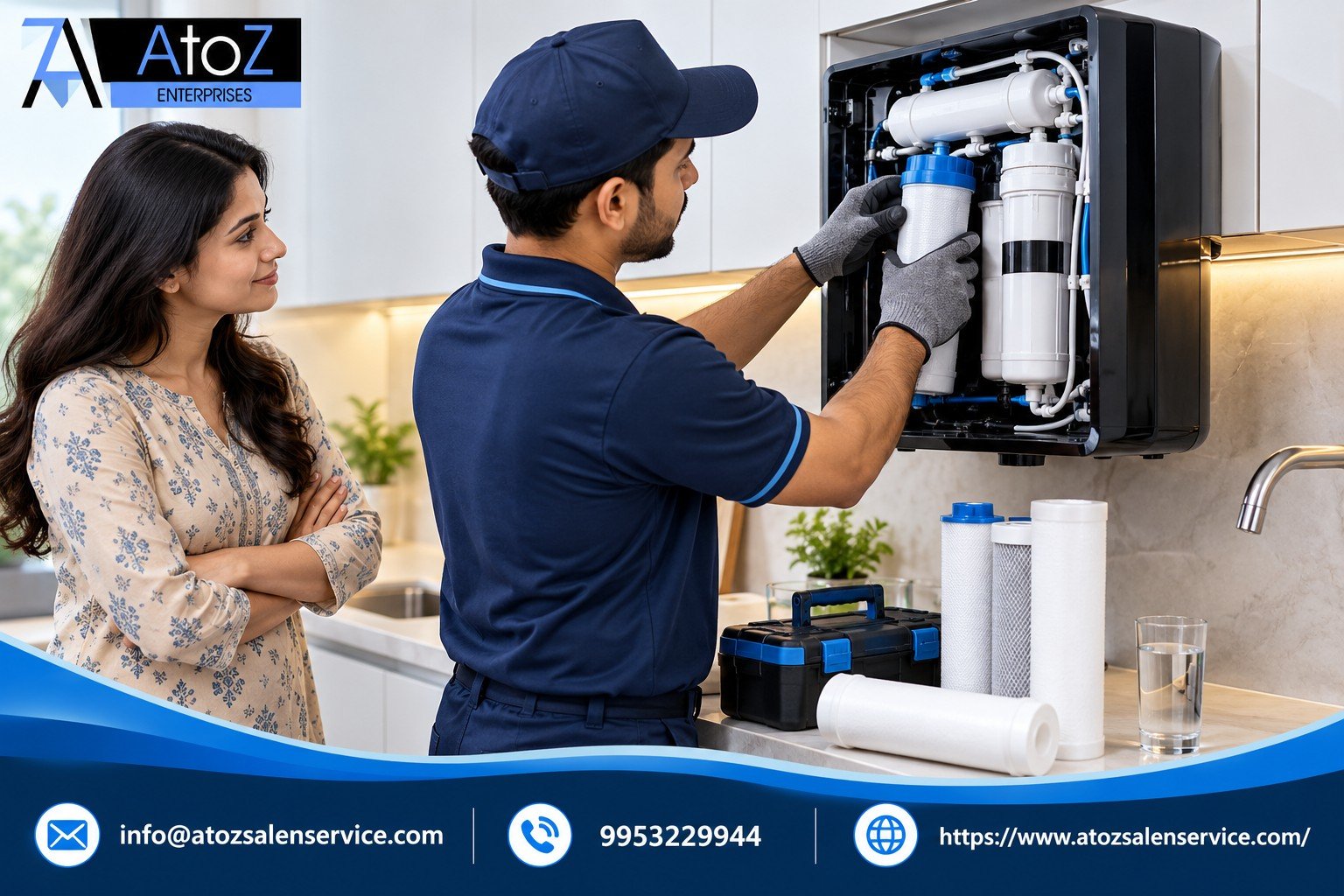
During Kent RO Water Purifier Service, a technician should inspect the filtration stages, assess water production, examine the membrane's performance, and determine whether replacement is actually necessary.
Replacing filters without checking their condition can increase maintenance expenses. Similarly, continuing to operate an exhausted component may affect purification performance.
3. What Is Included in Professional RO Repair?
Professional repair should begin with a proper diagnosis rather than immediate replacement of multiple components.
A typical inspection may include:
-
Checking the inlet-water supply and pressure.
-
Examining sediment and carbon filters.
-
Inspecting the RO membrane.
-
Checking booster-pump performance.
-
Examining electrical connections and sensors.
-
Inspecting pipelines, valves, and connectors.
-
Checking the storage tank and water-flow arrangement.
-
Testing the purifier after completing repairs.
A qualified technician should explain the identified fault, recommend suitable corrective work, and provide a clear estimate before replacing any component.
4. Signs Your Kent Purifier Needs Immediate Attention
Certain warning signs indicate that the purifier should be inspected instead of continuing normal operation.
Persistent leakage: Water around the purifier or beneath the storage tank may indicate a damaged connector, loose fitting, or internal leakage.
Sudden change in taste: An unusual taste or smell should not be ignored. The source-water quality and filtration system may need examination.
Slow tank filling: Reduced production can result from clogged filters, membrane problems, insufficient pressure, or pump-related faults.
Unusual noise: Repeated clicking, excessive vibration, or abnormal pump sounds may indicate mechanical or electrical problems.
Repeated shutdowns: Frequent interruptions can be associated with sensor faults, power issues, pressure conditions, or internal component failure.
Early inspection can help prevent minor issues from developing into more complicated repair requirements.
5. How to Choose the Right Repair Technician
When looking for kent ro repair service near me, customers should compare more than the initial visiting charge. Technical experience, transparent pricing, compatible replacement parts, proper testing, and post-repair support are important factors.
Before approving repairs, ask the technician to explain:
-
What is causing the problem?
-
Which component requires repair or replacement?
-
Is the replacement component compatible with the purifier model?
-
Are labour and spare-part charges included in the estimate?
-
Will the purifier be tested after the repair?
A reliable service provider should communicate the problem clearly instead of recommending unnecessary replacements.
6. Practical Maintenance Tips for Better Performance
Regular care can help improve purifier reliability and reduce avoidable breakdowns.
Keep the exterior clean: Wipe the purifier's outer surface using a clean, soft cloth. Avoid allowing water to enter electrical areas.
Monitor water flow: Notice any sudden reduction in tank-filling speed or changes in normal operation.
Maintain service records: Record filter replacements, membrane changes, and major repairs. This helps technicians understand the purifier's maintenance history.
Check for leakage: Occasionally inspect the area around the purifier, pipes, and storage tank for signs of water leakage.
Follow manufacturer recommendations: Filter replacement and maintenance intervals should depend on the specific model, usage, and incoming water quality.
Avoid unnecessary DIY repairs: Opening electrical compartments or removing internal components without technical knowledge can create additional faults.
These simple practices can support better performance between professional maintenance visits.
7. Why Professional Maintenance Is a Better Long-Term Approach
Regular maintenance is not only about correcting existing problems. It also helps identify developing faults before they affect the complete purification system.
Professional ro kent service should focus on the condition of the entire purifier, including filters, membrane, pump, pressure arrangement, tubing, and electrical components. This approach helps avoid repeated troubleshooting and unnecessary part replacements.
For households and offices in Gurgaon, access to timely technical support is particularly useful when the purifier is used regularly and uninterrupted drinking-water availability is important.
Frequently Asked Questions
How often should a Kent RO purifier be serviced?
The service interval depends on source-water quality, daily usage, purifier model, and filter condition. Follow manufacturer recommendations and arrange an inspection when performance changes.
Why is my Kent RO purifier producing less water?
Common causes include clogged filters, membrane fouling, insufficient inlet pressure, blocked tubing, or pump problems. A technical inspection can identify the exact reason.
Can a Kent RO membrane be cleaned instead of replaced?
In some systems, membrane cleaning may be possible under appropriate conditions. However, severely damaged or exhausted membranes generally require replacement according to manufacturer specifications.
Is professional RO maintenance necessary?
Yes. Professional inspection helps identify internal faults, check filtration performance, detect leakage, and determine whether components require attention.
Conclusion
Maintaining a Kent water purifier requires attention to filter condition, membrane performance, water pressure, pump operation, and plumbing connections. Ignoring early warning signs can lead to reduced water production, leakage, and unnecessary repair expenses.
Choosing technically competent support and following a practical maintenance routine can help keep the purifier operating reliably. Regular inspections, timely replacement of worn components, and proper testing after repairs are essential for long-term performance.