Why Does an RO Water Purifier Waste So Much Water? Causes, Solutions & Water-Saving Tips for Gurgaon Homes
Reverse osmosis (RO) water purifiers are widely used in homes because they help reduce dissolved salts, impurities and other unwanted substances from drinking water. However, one common concern among users is the amount of water discharged during the purification process. If you notice a continuous flow of water from your purifier into the drain, you may wonder whether your system is working properly or wasting more water than necessary.
The RO water wastage problem is often related to the purification process itself, but excessive discharge can also indicate a maintenance or performance issue. AToZ Enterprises helps homeowners understand common purifier problems and the importance of timely inspection and maintenance.
Why Does an RO Water Purifier Waste Water?
An RO purifier uses a semi-permeable membrane to separate many dissolved impurities from incoming water. During this process, a portion of the water passes through the membrane and becomes purified, while the remaining water carries away concentrated dissolved substances.
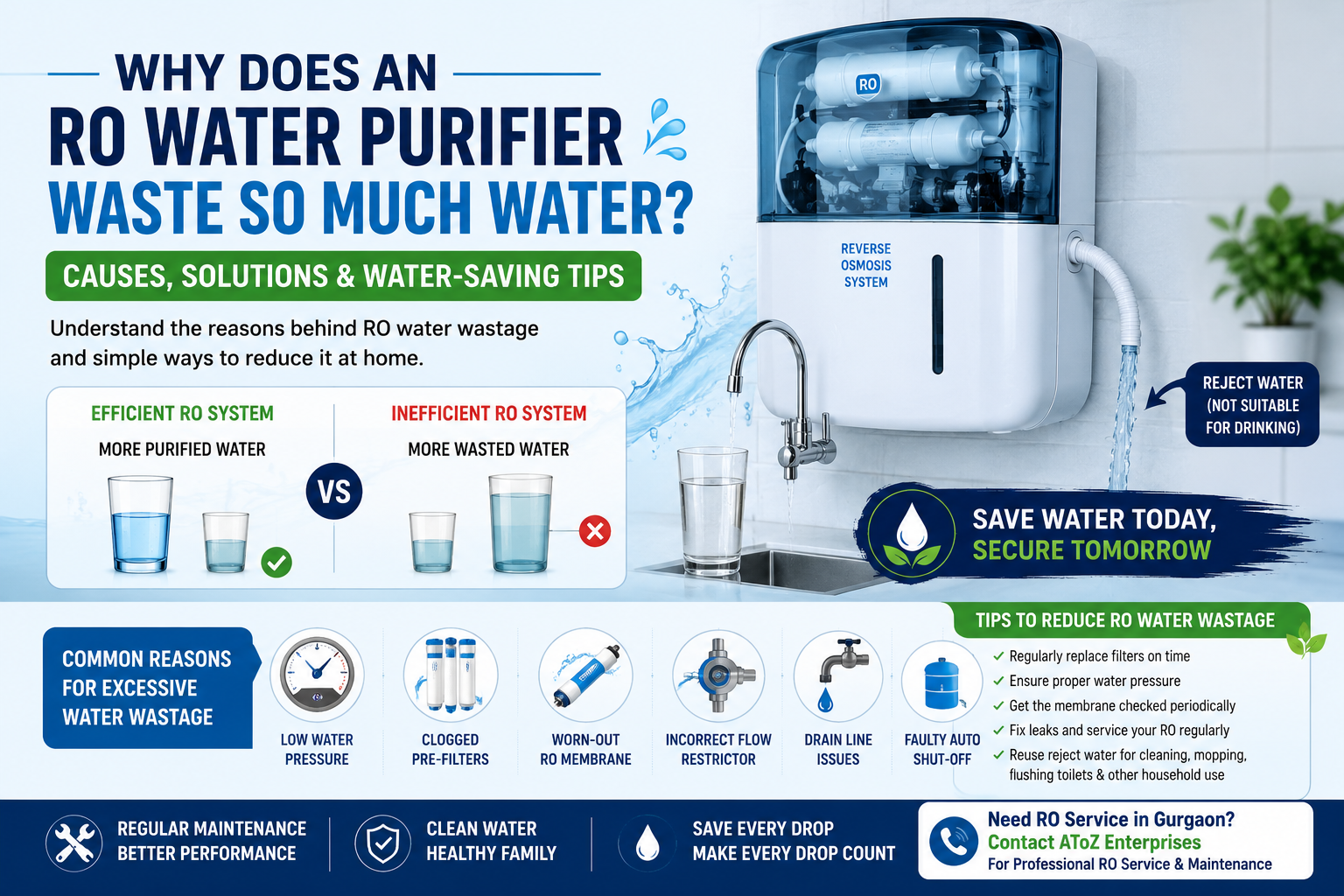
This discharged water is commonly known as reject water or wastewater. It is a normal part of reverse osmosis technology and helps prevent impurities from accumulating excessively on the membrane.
The amount of reject water depends on several factors, including:
-
Incoming water TDS level
-
Water pressure supplied to the purifier
-
Membrane quality and condition
-
Purifier design and recovery efficiency
-
Pre-filter condition and maintenance
Therefore, some water discharge is expected, but unusually high wastage deserves attention.
6 Common Reasons Behind Excessive RO Water Wastage
1. High TDS Levels in Incoming Water
When the incoming water contains a high concentration of dissolved salts, the RO membrane has to separate a greater amount of impurities. Depending on the system design and water quality, this can increase the volume of reject water.
In areas of Gurgaon where groundwater quality varies between locations, testing the source water can help determine whether the purifier is operating under suitable conditions.
2. Low Water Pressure
RO systems require adequate inlet pressure to push water through the membrane. When pressure is too low, the purification process may become inefficient, and the system may discharge more water relative to the purified output.
A faulty booster pump, restricted inlet pipe or inadequate water supply can contribute to this issue.
3. Worn-Out or Fouled RO Membrane
The membrane is one of the most important components of an RO purifier. Over time, mineral deposits, suspended particles and other contaminants can affect its performance.
A damaged, clogged or ageing membrane may produce less purified water and affect the reject-water ratio. Regular inspection helps identify whether cleaning, maintenance or replacement is required.
4. Blocked Pre-Filters
Pre-filters remove sediment, chlorine and other substances before water reaches the RO membrane. If these filters become clogged, they can restrict water flow and affect overall purification performance.
Replacing filters according to their condition and the manufacturer's recommendations can help maintain efficient operation.
5. Incorrect Flow Restrictor or Drain-Line Issues
The flow restrictor helps regulate the amount of water discharged from the RO membrane. If it is damaged, incorrectly fitted or unsuitable for the purifier model, the system may release more water than expected.
Drain-line restrictions or incorrect installation can also interfere with normal operation. These components should be checked by a trained technician rather than adjusted without proper knowledge.
6. Continuous Purifier Operation
If an RO purifier keeps running even after its storage tank is full, it may be wasting additional water.
Possible reasons include a faulty automatic shut-off valve, malfunctioning float switch, pressure-related problems or leakage. A technician can inspect the control components and identify the actual cause.
How to Reduce RO Water Wastage at Home
You cannot eliminate all reject water from a conventional RO system, but you can take practical steps to improve its efficiency.
-
Maintain the filters: Replace pre-filters when required to prevent restrictions and protect the membrane.
-
Check water pressure: Ensure the purifier receives the pressure recommended by its manufacturer.
-
Inspect the membrane: Get it checked if water production decreases or the reject-water ratio changes significantly.
-
Fix leakage promptly: Even a small leak can lead to unnecessary water loss over time.
-
Check automatic shut-off: Make sure the purifier stops operating when its storage tank is full.
-
Choose a suitable purifier: Select a system based on your source-water quality, daily consumption and actual treatment requirements.
Following these steps can help address the causes of excessive discharge and support better purifier performance.
Can RO Reject Water Be Reused?
Yes, reject water can be reused for certain non-drinking purposes, provided it is handled appropriately. Since it contains concentrated dissolved salts and other rejected substances, it should not be treated as drinking water.
Some practical reuse options include:
-
Floor cleaning and mopping
-
Toilet flushing
-
Washing outdoor areas
-
Cleaning vehicles, where the water quality is suitable
Avoid using high-TDS reject water for sensitive plants, cooking or drinking. Its suitability for reuse depends on the source water and the concentration of dissolved substances.
A separate collection container can help reduce unnecessary water disposal, but it should be cleaned regularly to prevent contamination.
When Should You Call an RO Service Technician?
Occasional reject-water discharge is normal, but certain symptoms may indicate that your purifier needs professional attention.
Consider arranging an inspection if:
-
The drain line releases water continuously.
-
The purifier takes unusually long to fill its storage tank.
-
Water production has decreased noticeably.
-
The system keeps running after the tank becomes full.
-
You notice leakage around the purifier or its connections.
-
The purified water has an unusual taste or odour.
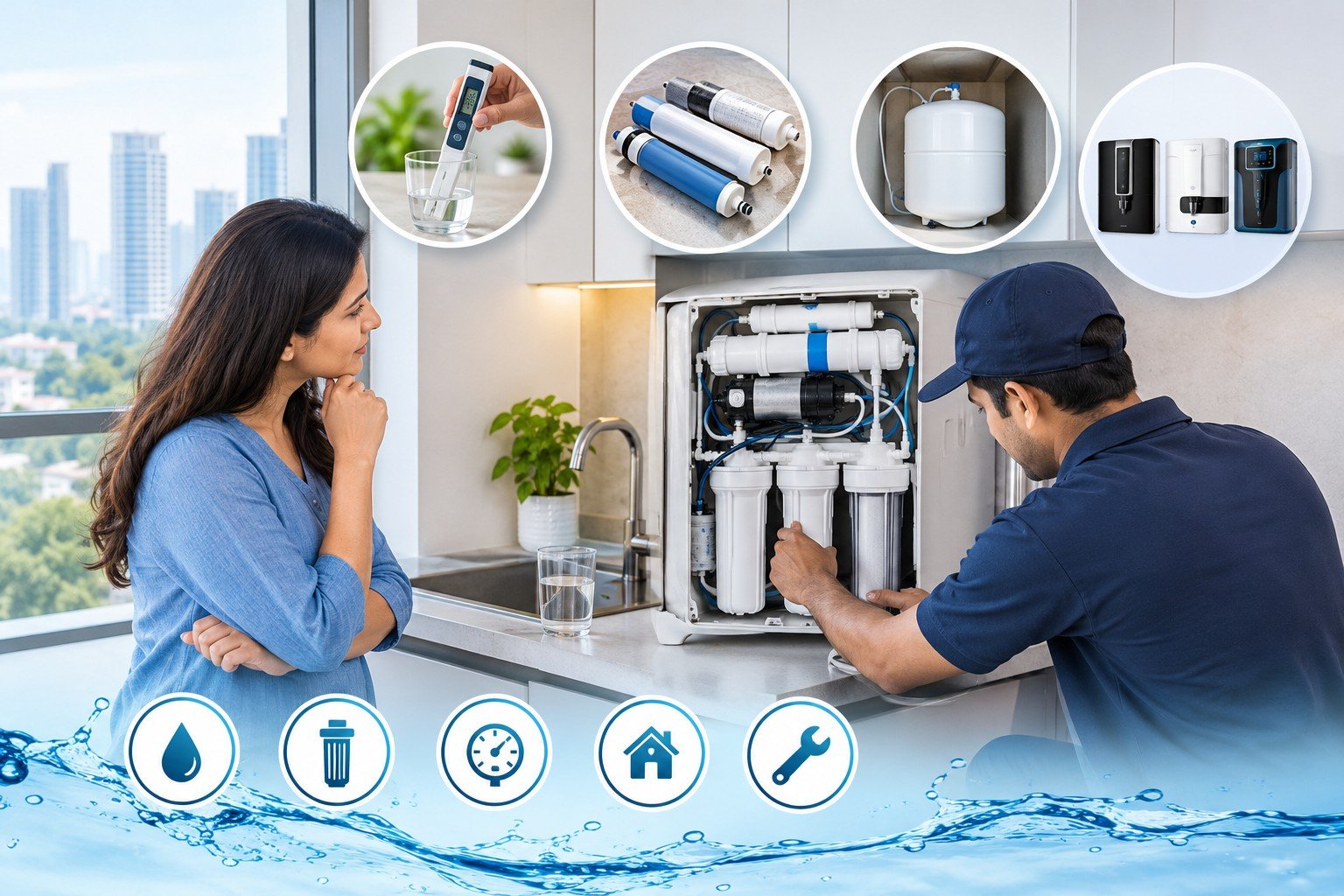
Professional RO water purifier maintenance can include checking the membrane, filters, pump pressure, flow restrictor, drain line and automatic shut-off mechanism. The exact checks depend on the purifier model and the symptoms.
Choosing the Right RO Maintenance Support in Gurgaon
Water quality and operating conditions can vary across Gurgaon. A purifier installed in one locality may require different maintenance attention from a system operating with a different groundwater source.
When selecting an RO technician, look for someone who can inspect the complete system instead of recommending immediate membrane replacement without testing. Ask for an explanation of the problem, the components that need attention and the expected service cost.
For homeowners looking for dependable RO service in Gurgaon, timely inspection can help identify performance issues before they lead to more significant repairs.
Frequently Asked Questions
1. Is it normal for an RO purifier to waste water?
Yes. Conventional RO purifiers discharge some water to remove concentrated dissolved impurities from the membrane. The amount varies with water quality, pressure, system design and operating condition.
2. How can I reduce RO water wastage?
Maintain the pre-filters and membrane, ensure suitable inlet pressure, fix leaks and check the automatic shut-off system. A purifier designed for better water recovery may also be suitable, depending on your water quality.
3. Can RO reject water be used for plants?
It depends on its dissolved salt concentration and the sensitivity of the plants. High-TDS reject water may damage plants and should not be used indiscriminately.
4. Why does my RO purifier keep draining water?
Possible causes include a faulty automatic shut-off valve, membrane performance issues, an incorrect flow restrictor or pressure-related problems. A proper inspection can identify the cause.
Conclusion
Water discharge with AToZ Enterprises is an essential part of conventional RO purification, but excessive wastage should not be ignored. Understanding the role of water pressure, membrane condition, pre-filters and automatic shut-off components can help you identify potential problems and improve system efficiency.
Regular maintenance, responsible reuse of reject water and choosing a purifier suitable for your water quality can make a meaningful difference in household water management.